In today’s dynamic business landscape, one thing is certain: Efficiency is the lifeblood of any organization, regardless of the industry it operates in. Having worked with entrepreneurs across diverse sectors such as Realty, SaaS, Telecom, Entertainment, Hospitality, Pharma, Retail, Media, Education, Recycling, and Agro, I’ve had the privilege of witnessing the evolution of management practices and the constant pursuit of operational excellence. In this article, I want to shed light on the timeless principles of Lean Six Sigma, a methodology I’ve found to be a cornerstone in my consulting career, enabling entrepreneurs to streamline their operations and achieve remarkable efficiency gains.
The Lean Six Sigma Paradigm
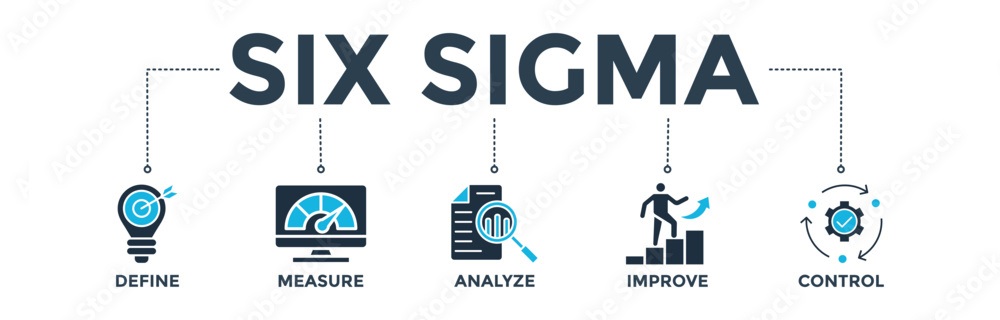
Lean Six Sigma is a systematic approach to process improvement that combines two distinct but highly complementary methodologies: Lean and Six Sigma. Lean focuses on the elimination of waste and non-value-added activities, while Six Sigma aims to reduce variation and defects in processes. When these methodologies are effectively integrated, they create a powerful framework for optimizing operations, enhancing quality, and boosting overall efficiency.
Applying Lean Six Sigma Across Industries
My extensive experience working with entrepreneurs in various sectors has shown that Lean Six Sigma is adaptable and effective across a multitude of industries. Here’s how it can be applied in the contexts of Realty, SaaS, Telecom, Entertainment, Hospitality, Pharma, Retail, Media, Education, Recycling, and Agro:
- Realty: Lean Six Sigma can be instrumental in streamlining property management and construction processes, reducing lead times, and enhancing customer satisfaction through improved project delivery.
- SaaS: For software-as-a-service startups, it can help in optimizing software development and deployment processes, resulting in faster time-to-market and increased customer retention.
- Telecom: In the telecom sector, it can be employed to enhance network infrastructure, reduce downtime, and improve service quality.
- Entertainment: Lean Six Sigma principles can assist in optimizing content creation workflows, reducing costs, and improving content delivery.
- Hospitality: In the hospitality industry, it can lead to improved guest experiences, efficient hotel operations, and reduced wastage.
- Pharma: For pharmaceutical companies, Lean Six Sigma can aid in achieving quality control, reducing manufacturing defects, and expediting the drug development process.
- Retail: It can enhance supply chain management, inventory control, and customer service processes, leading to increased customer satisfaction and higher profit margins.
- Media: In the media industry, it can improve content production efficiency, reduce errors, and accelerate content delivery.
- Education: Lean Six Sigma can streamline administrative processes within educational institutions, leading to cost savings and more effective resource allocation.
- Recycling: For recycling businesses, it can help in optimizing collection and sorting processes, increasing material recovery rates, and reducing waste.
- Agro: In agriculture, it can be applied to enhance farming processes, reduce resource wastage, and improve crop yield.
The Path to Efficiency: A Collaborative Approach
One of the critical lessons I’ve learned over my years as a management consultant is that successful Lean Six Sigma implementation requires a collaborative effort. Entrepreneurs must involve their teams, fostering a culture of continuous improvement and empowering employees to identify and address operational inefficiencies. Regular training, data-driven decision-making, and a commitment to measuring results are essential components of this approach.
As a Management Consultant with over 20 years of experience across various industries, I have seen firsthand the power of Lean Six Sigma principles to streamline operations and improve efficiency. Lean Six Sigma is a data-driven methodology that combines the best practices of Lean manufacturing and Six Sigma quality improvement. It is a powerful tool that can be used to improve any process, from manufacturing to customer service to administrative tasks.
One of the key principles of Lean Six Sigma is to identify and eliminate waste. Waste is any activity that does not add value to the customer. It can take many forms, such as:
- Transportation: Moving materials or products unnecessarily
- Inventory: Having too much inventory on hand
- Motion: Unnecessary movement of people or materials
- Waiting: Waiting for materials, information, or approvals
- Overproduction: Producing more than the customer needs
- Defects: Producing products or services that do not meet customer requirements
Lean Six Sigma practitioners use a variety of tools and techniques to identify and eliminate waste. One common tool is value stream mapping, which helps to visualize the entire flow of materials and information through a process. Another common tool is root cause analysis, which is used to identify the underlying causes of problems.
Once waste has been identified, Lean Six Sigma practitioners can develop and implement solutions to eliminate it. This may involve changing process steps, rearranging equipment, or training employees.
Another key principle of Lean Six Sigma is to standardize processes. Once a process has been improved, it is important to standardize it so that it can be consistently performed by all employees. This helps to ensure that the benefits of the improvement are sustained over time.
Lean Six Sigma can be used to improve any process, regardless of industry. Here are a few examples:
- Manufacturing: Reducing lead times, improving product quality, and reducing costs
- Healthcare: Reducing patient wait times, improving patient outcomes, and reducing costs
- Customer service: Reducing customer response times, improving customer satisfaction, and reducing costs
- Administrative tasks: Reducing processing times, improving accuracy, and reducing costs
Lean Six Sigma is a powerful tool that can help organizations to streamline operations, improve efficiency, and reduce costs. It is a proven methodology that has been used successfully by organizations of all sizes in all industries.
At Samunnati Ventures, we specialize in helping organizations to implement Lean Six Sigma principles. We have a team of experienced consultants who can help you to identify and eliminate waste, improve efficiency, and reduce costs. We can also help you to train your employees in Lean Six Sigma principles so that they can sustain the improvements over time.
If you are interested in learning more about how Lean Six Sigma can help your organization, please contact Samunnati Ventures today.
What are some of the biggest challenges that you face in streamlining operations and improving efficiency in your organization? How have you used Lean Six Sigma to address these challenges?
Please share your thoughts and experiences in the comments below.