Introduction
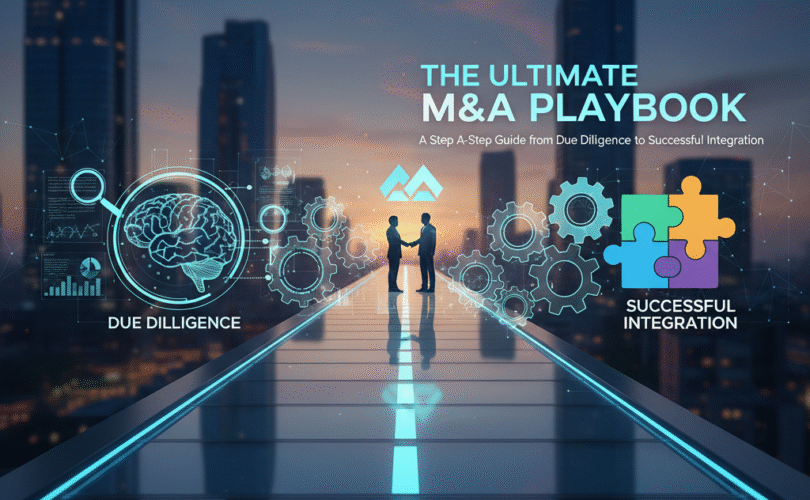
In an increasingly dynamic global marketplace, mergers and acquisitions (M&A) have become a strategic lever for growth, diversification, and competitive advantage. Yet, despite their potential, many deals fall short of expectations due to poor planning or execution. The complexity of aligning financial, legal, and cultural dimensions often leads to integration failures. This blog unpacks the critical stages of the M&A journey — from due diligence through to integration — providing business leaders and financial professionals with a detailed playbook to navigate the process effectively and maximise deal value.
Understanding M&A and Its Core Components
M&A represent a strategic alliance where companies combine their operations, assets, and market strengths to achieve accelerated growth, synergies, or market expansion. A merger occurs when two entities agree to unite as one, typically forming a new organisation. An acquisition, on the other hand, involves one company purchasing another, either partially or wholly, to gain control. These transactions are underpinned by multiple drivers — market consolidation, diversification, access to technology, talent acquisition, or the pursuit of scale efficiencies. While ambitious in intent, every successful M&A deal is built upon comprehensive due diligence that examines the target company’s financial health, liabilities, operations, and cultural compatibility. It’s a multidimensional process that demands collaboration across finance, legal, operations, and human resources. Importantly, M&A is not merely a financial transaction; it signifies strategic transformation, which influences shareholder value, organisational culture, and long-term market positioning.
The Importance and Current Relevance of M&A
Today, M&A activity is more than a growth tactic — it is an essential tool for adaptation in fast-evolving sectors. Global economic shifts, technological innovation, and increased competition are prompting companies to consolidate strengths and expand capabilities through strategic deal-making. Over the past decade, we have seen M&A activity surge across industries such as technology, healthcare, and renewable energy, where companies seek to quickly build digital capabilities or access innovation ecosystems. However, success remains elusive. Studies consistently reveal that a significant proportion of deals underperform because strategic objectives are unclear or cultural integration is overlooked. For example, several large technology mergers have shown that while financial fit can look sound on paper, the failure to integrate teams and systems effectively can erode expected synergies. Therefore, M&A is not merely about acquisition — it’s about integration, alignment, and achieving a sustainable new operating model that supports long-term growth ambitions. In this context, understanding the full M&A lifecycle has never been more vital.
Executing an Effective M&A Strategy
For organisations seeking to undertake successful M&A, a structured and disciplined approach is paramount. Below is a practical framework to steer the process from evaluation through execution:
- Strategic Clarity: Define the rationale for the deal early. Establish what strategic objectives it will fulfil — market share, diversification, capability enhancement — and ensure alignment with corporate goals.
- Rigorous Due Diligence: Undertake comprehensive financial, operational, and legal scrutiny. Go beyond financials to assess cultural fit, management capability, and potential risks that could impact post-deal returns.
- Valuation and Deal Structuring: Determine a fair valuation and deal structure that reflects both current performance and future potential. Structure earn-outs or performance-based incentives to align interests.
- Integration Planning: Start integration planning even before the deal closes. Develop a detailed roadmap defining organisational structure, key processes, and leadership responsibilities. Cultural alignment should be prioritised as much as systems integration.
- Communication and Change Management: Transparent and consistent communication is essential to build trust among employees, customers, and investors. Effective change management mitigates uncertainty and ensures buy-in across all levels.
- Post-Deal Measurement: Establish clear performance metrics to evaluate the success of the merger or acquisition. Regularly monitor synergy realisation, customer retention, and cultural alignment.
By adhering to these disciplined steps, organisations can transform M&A from a transactional exercise into a strategic capability — enabling them to build resilient, future-ready businesses.
Conclusion
M&A can be one of the most effective levers for achieving strategic growth, yet it is also fraught with complexity and risk. The difference between success and underperformance lies in the depth of preparation, precision in execution, and strength of integration. By applying a rigorous framework from due diligence through integration, business leaders can uncover opportunities, protect value, and ensure long-term synergy realisation. In an era defined by disruption and convergence, mastering the M&A playbook is not just an advantage — it is a strategic imperative for sustainable success.
Key Takeaways
- Effective M&A requires alignment between strategic intent and operational capability.
- Thorough due diligence is essential to uncover value drivers and potential risks.
- Successful integration depends on early planning and cultural alignment.
- Transparent communication is crucial to maintain trust and engagement.
- Ongoing performance measurement ensures long-term value creation and synergy realisation.