The perception that Environmental, Social, and Governance (ESG) is just for compliance or PR is fundamentally outdated. For modern business leaders, sustainability has become the ultimate driver of competitive advantage, financial performance, and long-term value creation.
In today’s corporate world, success is inextricably linked to stewardship. Organisations embedding sustainability into their DNA are not just meeting stakeholder expectations—they are outperforming their peers. This is the shift from viewing sustainability as a cost center to a value generator.
1. From Compliance to Core Strategy: The ESG Shift
Sustainability, at its core, means integrating ESG principles directly into your strategy, operations, and decision-making. This goes far beyond recycling bins; it demands comprehensive frameworks for:
-
Climate Resilience: Decarbonization and adaptation planning.
-
Supply Chain Transparency: Ethical sourcing and labor practices.
-
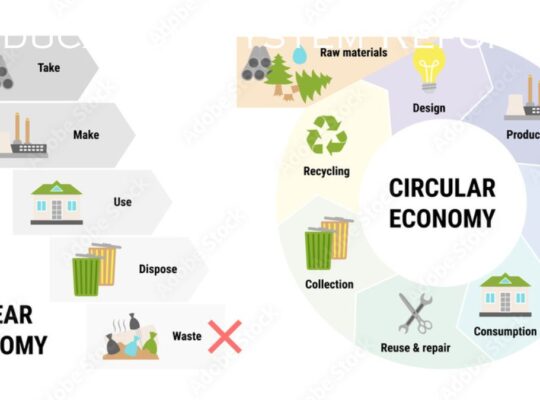
Resource Efficiency: Waste reduction and circular economy models.
The takeaway? When sustainability is integral to product development and operational efficiency, it transforms into a powerful economic advantage, yielding measurable returns on investment.
2. The Unavoidable Market Mandate: Where Capital and Consumers Are Moving
The business case for strategic sustainability is overwhelming, driven by two forces: Capital Allocation and Consumer Demand.
💰 The Investor View: Reshaping Capital Flows
-
Massive Momentum: ESG-focused institutional investments are projected to reach £33.9 trillion by 2026.
-
Decision Power: 89% of investors now factor ESG into their decision-making.
-
Risk & Return: 54% of CEOs report tangible business value from sustainability investments, while 57% of companies report direct financial losses attributable to climate change.
🛍️ The Consumer View: Loyalty and Premium
-
Willingness to Pay: 72% of global consumers are willing to pay a premium for sustainable products.
-
Loyalty Earned: 88% of consumers show increased loyalty to businesses advocating for social or environmental causes.
The bottom line: Failure to embrace sustainability strategically is no longer a reputation risk—it’s a competitive disadvantage and a direct financial exposure.
3. Action Plan: Embedding Sustainability Systematically
Translating aspiration into operational reality requires deliberate, systemic action. Here are the pathways to make sustainability a core business function:
| Strategic Pathway | Key Action Items |
| Materiality & Focus | Conduct a comprehensive materiality assessment to prioritize efforts where you can generate the most meaningful change for your business and stakeholders. |
| Accountability & Targets | Establish science-based targets (especially for emissions) and ensure accountability by embedding transparent reporting across the value chain. |
| Governance Integration | Embed ESG considerations directly into Board oversight, executive compensation, and capital allocation processes. |
| Supply Chain Transformation | Mandate supplier transparency and performance. 49% of companies actively award more business to suppliers with strong sustainability performance. |
| Tech & Data Investment | Invest in data infrastructure for precise carbon accounting and resource optimization. You can’t manage what you don’t measure. |
🎯 The Next Level of Leadership
Sustainability is not merely corporate virtue signaling; it is a fundamental restructuring of how value is created and distributed in modern ecosystems.
Organisations that treat sustainability as a strategic investment—rather than a compliance burden—will secure talent, attract capital, build resilience, and ultimately define the competitive landscape of tomorrow.
The question is no longer if you should pursue sustainability, but how quickly and comprehensively you will transform your business to capture the value it unlocks.
What’s your biggest challenge in integrating ESG into your operational strategy? Share your thoughts below!