
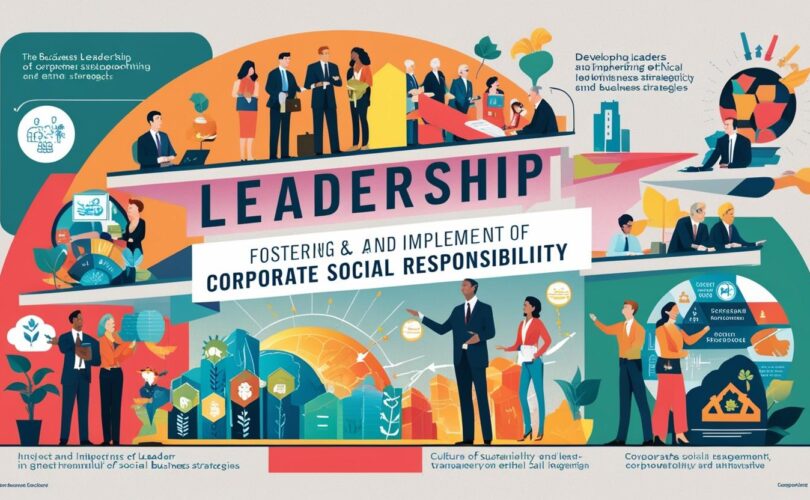
In the modern business landscape, corporate responsibility is no longer a peripheral concern but a core aspect of a company’s identity and success. At the heart of this shift is the role of leadership in fostering a culture that prioritizes ethical practices, social responsibility, and environmental sustainability.
Setting the Tone from the Top
Leadership plays a pivotal role in shaping the culture of an organization. As the renowned business leader, Howard Schultz, once said, “When you’re surrounded by people who share a passionate commitment around a common purpose, anything is possible.” This passion and commitment start at the top. Leaders must embody the values they expect from their employees and stakeholders. By doing so, they set a powerful example that resonates throughout the organization.
Defining Corporate Responsibility
Corporate responsibility encompasses a broad range of activities, including ethical business practices, community engagement, environmental stewardship, and social accountability. A feasibility study, for instance, can help identify potential risks and opportunities in these areas, allowing leaders to make informed decisions that align with their corporate responsibility goals.
Market and Financial Implications
A market analysis and financial evaluation are crucial components of any corporate responsibility strategy. Leaders must understand the market demand for responsible practices and the financial implications of implementing such strategies. For example, a company that invests in sustainable practices may see long-term financial benefits through reduced operational costs and enhanced brand reputation.
Technical and Operational Feasibility
The technical and operational feasibility of corporate responsibility initiatives are also critical. Leaders need to assess whether the organization has the necessary technology, infrastructure, and operational capabilities to support these initiatives. This includes evaluating the skills and resources required to implement and maintain responsible practices.
Risk Assessment and Mitigation
Risk assessment is another vital aspect of corporate responsibility. Leaders must identify potential challenges and develop mitigation strategies to address them. This involves a thorough analysis of legal and regulatory hurdles, as well as the development of contingency plans to manage unforeseen risks.
Engaging Stakeholders
Effective leadership in corporate responsibility involves engaging all stakeholders, including employees, customers, investors, and the broader community. As Richard Branson, the founder of Virgin Group, has noted, “The key is to set realistic customer expectations, and then not to just meet them, but to exceed them — preferably in unexpected ways.” By exceeding expectations in terms of corporate responsibility, leaders can build trust and loyalty among their stakeholders.
Cultural Integration
Corporate responsibility should be deeply ingrained in the organizational culture. Leaders must ensure that these values are integrated into every aspect of the business, from hiring practices to product development. This cultural shift requires continuous communication, training, and reinforcement to ensure that all employees understand and embrace the organization’s commitment to responsibility.
Promoting a Culture of Responsibility
Promoting a culture of corporate responsibility is an ongoing process that requires consistent effort and commitment from leadership. It involves celebrating successes, learning from failures, and continuously improving practices. By doing so, leaders can create a sustainable and responsible business model that benefits both the organization and the wider community.
Conclusion
In conclusion, the role of leadership in shaping a culture of corporate responsibility is paramount. Leaders must set the tone, define the vision, and ensure the feasibility and implementation of responsible practices. By doing so, they can create a culture that is not only ethical and sustainable but also financially viable and socially beneficial.
—
About Samunnati Ventures
At Samunnati Ventures, we specialize in providing comprehensive business consulting services, including feasibility studies, business planning, financial modeling, and corporate strategy development. With over 20 years of experience working across diverse industries and geographies, we are well-equipped to help your organization navigate the complexities of corporate responsibility and achieve long-term success. Contact us today to learn how we can support your journey towards a more responsible and sustainable business model.