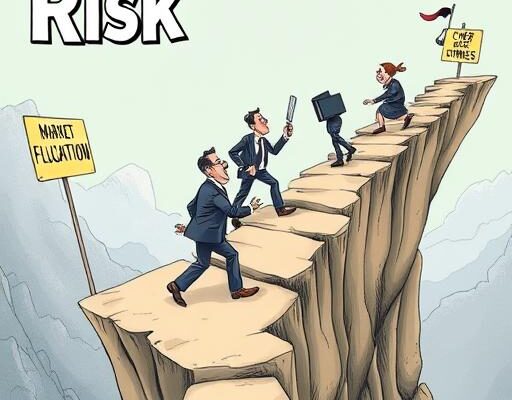
In today’s fast-moving enterprise world, the only constant is change. Market shifts, tech disruptions, and unforeseen operational challenges can derail progress and compromise stability. For business leaders, dealing with these “unknown unknowns” isn’t a defensive chore—it’s a massive competitive advantage.
This isn’t about eliminating all risk; that’s impossible. It’s about achieving a deep, nuanced understanding of threats to systematically protect your capital and earnings, and, crucially, maximize emerging opportunities.
🎯 Why Proactive Risk Management is Non-Negotiable
The contemporary landscape—characterized by global connectivity and rapid evolution—makes risk management an indispensable driver of sustained growth, innovation, and survival.
The tangible benefits are clear:
-
Prevent Costly Disruptions: Stop operational failures before they happen.
-
Safeguard Reputation: Protect your most valuable non-tangible asset.
-
Ensure Compliance: Navigate complex global and national regulations seamlessly.
-
Underpin Strategy: Make sound, evidence-based decisions, not reactive guesses.
-
Build Investor Confidence: Showcase stability and foresight to stakeholders.
Recent events, from global supply chain shocks to the accelerating pace of cyber threats, prove this point. Organizations with a robust risk framework adapted faster, recovered quicker, and even thrived—turning potential threats into manageable challenges.
🛠️ The 5-Step Framework for Building Resilience
Implementing a comprehensive risk framework involves a continuous, systematic process. Adopt these steps to develop an adaptive defense against uncertainty:
1. Identify Potential Threats: The Holistic Scan
Look everywhere! Engage key personnel, analyze historical data, and use checklists to cover all bases. A holistic view means considering risks across operational, financial, strategic, compliance, and reputational domains.
2. Analyze & Assess: Prioritize Your Focus
Once threats are identified, don’t treat them equally.
-
Determine the Likelihood of the event occurring.
-
Assess the potential Impact (financial, reputational, etc.)
-
Pro-Tip: Use a Risk Matrix (High/Medium/Low) to prioritize. This ensures you allocate resources where they deliver the maximum protective value.
3. Develop Response Strategies: The Four T’s
Formulate a strategic action plan for each significant risk:
-
➡️ Avoidance: Eliminate the activity causing the risk entirely.
-
📉 Mitigation: Implement controls to reduce likelihood or impact (e.g., contingency plans, specialized training).
-
🤝 Transfer: Shift the financial burden to a third party (e.g., insurance, contractual agreements).
-
✅ Acceptance: Consciously decide to accept low-impact risks where the cost of response outweighs the benefit.
4. Monitor & Review: Stay Ahead of the Curve
The business environment is dynamic. Your risks are not static. Regularly review identified threats, assess the effectiveness of implemented controls, and actively look for new or emerging risks. This continuous cycle ensures your framework remains relevant.
5. Report & Communicate: Foster a Risk-Aware Culture
A framework is useless if it lives only in the C-suite. Effective communication is crucial. Inform all stakeholders about identified threats and management efforts. When everyone understands their role in anticipating risk, you enhance collective organizational resilience.
📈 The Bottom Line
Risk management is a dynamic process fundamental to sustained business success. It’s the essential tool that allows your organization to navigate uncertainty, safeguard assets, and cultivate true resilience.
By embedding these methodical steps into your organizational DNA, you empower your business to not only withstand various challenges but to confidently seize new opportunities, ensuring a more stable and prosperous future.
Key Takeaways for Leaders:
-
Focus on Value: Risk management is a value-creator, not just a cost-center.
-
Prioritize: Use the Risk Matrix to focus resources on the highest-impact threats.
-
It’s Continuous: Treat your framework as a living document, not a one-time project.
-
Communicate: Success relies on a unified, risk-aware culture across all levels.
What is the single biggest risk you believe businesses are underestimating in 2026? Share your thoughts below! 👇