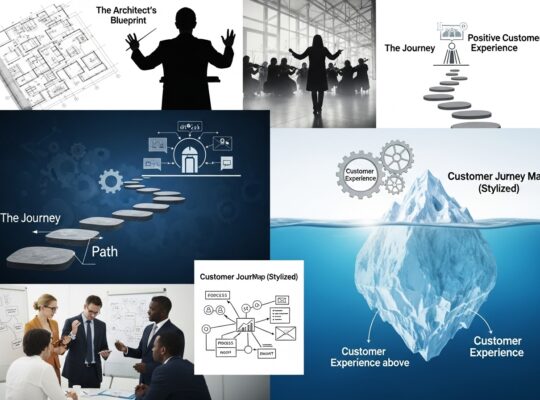

In today’s competitive landscape, many businesses still find themselves trapped in a reactive cycle when it comes to customer interactions. The focus often remains on fixing problems as they arise, a crucial but limited approach that overlooks the broader picture. While efficient customer service is undoubtedly valuable, it represents only a fraction of what truly shapes a customer’s perception and loyalty. This post aims to illuminate the profound difference between merely serving customers and strategically crafting their entire experience, offering insights for business leaders and dedicated customer service teams looking to transform their approach and cultivate lasting relationships.
The core concept at play is the customer experience, often abbreviated as CX. This encompasses the sum of all interactions a customer has with a brand, stretching from their initial discovery of a product or service, through their purchasing journey, usage, and subsequent support. It’s a holistic view, integrating every touchpoint – be it a website visit, a social media interaction, a phone call, or an in-store visit – and considers the emotional, physical, and cognitive responses these interactions evoke. In contrast, customer service is typically a specific, often reactive, interaction aimed at solving a problem, answering a query, or providing information. While an essential component, it is merely one facet within the much larger, multi-dimensional realm of the customer experience, which is built over time and defines the overall relationship a customer has with an organisation.
The significance of this comprehensive approach has never been more pronounced. With rising customer expectations, the rapid pace of digital transformation, and the amplifying power of social media, every interaction carries considerable weight. Businesses that prioritise a superior customer experience stand to gain immense benefits, including heightened customer loyalty, significantly improved retention rates, and an enviable brand reputation that naturally fuels positive word-of-mouth marketing. In an era where products and services can be easily replicated, a distinctive and consistently positive customer experience serves as a powerful differentiator and a compelling reason for customers to choose one brand over another, often even justifying a premium price point. Organisations adept at crafting seamless, personalised journeys, from the initial digital interaction to post-purchase follow-ups, are consistently demonstrating higher customer lifetime value and stronger market positions.
To move beyond transactional service towards an encompassing experience, organisations can adopt several strategic steps:
- Undertake comprehensive customer journey mapping to meticulously identify every touchpoint and potential pain point, gaining a clear visual understanding of the customer’s path and emotional state at each stage.
- Cultivate deep empathy and understanding of customer needs and desires by actively listening to feedback through surveys, reviews, and direct interactions, then analysing this data to uncover underlying motivations.
- Empower employees across all levels, particularly front-line staff, by providing them with robust training, appropriate tools, and the necessary autonomy to make decisions that enhance the customer’s interaction.
- Implement personalisation at scale, leveraging technology to tailor communications, recommendations, and services, ensuring that interactions feel relevant and individual without losing the essential human touch.
- Ensure seamless omnichannel integration, guaranteeing that customers enjoy a consistent, fluid, and uninterrupted experience whether they engage via online platforms, mobile applications, or traditional brick-and-mortar channels.
- Establish continuous feedback loops, not only collecting customer insights but critically, acting upon them promptly to iterate on processes, improve offerings, and demonstrate to customers that their voice is heard and valued.
Ultimately, the distinction between customer service and customer experience is not merely semantic; it represents a fundamental shift in business philosophy. While excellent service remains a cornerstone, a truly successful enterprise recognises that every single interaction, every touchpoint, contributes to a customer’s overarching perception of the brand. By proactively shaping a consistently positive and memorable customer experience across the entire journey, businesses not only solve immediate problems but also foster deep loyalty, build enduring relationships, and secure a sustainable competitive advantage in an ever-evolving market. Investing in CX isn’t just about good practice; it is the strategic imperative for future growth and lasting success.
Key Takeaways:
- Customer experience encompasses the entire customer journey, extending far beyond isolated service interactions.
- Prioritising CX builds loyalty, enhances brand reputation, and offers significant competitive differentiation.
- Understanding customer needs through journey mapping and feedback is fundamental to crafting superior experiences.
- Empowering employees and enabling genuine personalisation are crucial for delivering exceptional customer value.
- A holistic, seamless omnichannel approach ensures consistency and customer satisfaction across all engagement points.