India has a rich and vibrant tradition of weaving that dates back thousands of years. The Indian weaving industry is not only deeply rooted in the country’s culture and heritage but also plays a significant role in its economy. The industry has evolved over centuries, blending traditional craftsmanship with modern techniques and technologies to meet the demands of a global market. In this article, we will explore the history, significance, challenges, and future prospects of the Indian weaving industry.
Historical Perspective
The origins of the Indian weaving industry can be traced back to ancient times, with evidence of intricate textile production found in the Indus Valley Civilization, which thrived around 3300–1300 BCE. The textiles produced during this period were highly sophisticated and included a variety of fabrics and techniques.
Throughout history, various regions of India developed unique weaving traditions and specialized in specific types of fabrics and designs. For example, the Banarasi silk from Varanasi, Paithani silk from Maharashtra, Kanjeevaram silk from Tamil Nadu, and Pochampalli silk from Telangana and Andhra Pradesh are just a few examples of the diverse textile heritage in India.
Types of Weaving and Fabrics
The Indian weaving industry is renowned for its diverse range of fabrics and weaving techniques. Some of the prominent types of weaving and fabrics produced in India include:
- Silk Weaving: India is famous for its silk production and weaving. Varanasi, Mysore, Kanchipuram, and Bhagalpur are well-known for their silk fabrics. Silk sarees, in particular, are an integral part of Indian culture and are highly sought after both nationally and internationally.
- Cotton Weaving: Cotton weaving is another significant aspect of the Indian weaving industry. Various regions across the country specialize in producing different types of cotton fabrics, from fine muslin to durable khadi.
- Woollen Weaving: Woollen textiles are prominent in states like Kashmir, Himachal Pradesh, and Uttarakhand, where the cold climate necessitates warm clothing. Kashmiri shawls and Pashmina wool products are highly regarded for their quality and craftsmanship.
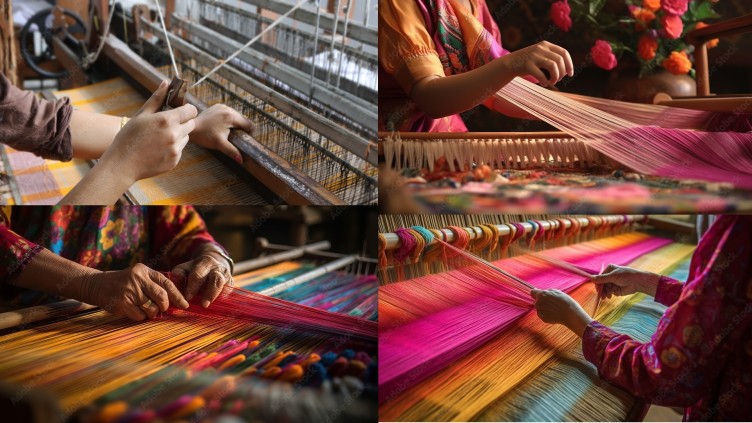
- Handloom Weaving: Handloom weaving is a traditional craft that produces a wide array of fabrics using manual techniques. This sector supports a large population of weavers and plays a vital role in preserving traditional skills and heritage.
- Power Loom Weaving: Modernization has brought about the advent of power looms, significantly increasing the efficiency and scale of textile production. Power looms are prevalent in various states, catering to the growing demand for textiles.
Significance of the Indian Weaving Industry
The Indian weaving industry holds immense cultural, economic, and social significance:
- Employment Generation: The industry is a significant source of employment, especially in rural areas. It provides livelihoods to millions of weavers and artisans, supporting their families and communities.
- Export Revenue: India is a major exporter of textiles and garments. The industry contributes significantly to the country’s foreign exchange earnings, enhancing its economic growth and global standing.
- Preservation of Heritage: Weaving is an ancient art form deeply ingrained in Indian culture. The industry helps preserve traditional skills, designs, and techniques that have been passed down through generations.
- Cultural Identity: Indian textiles are a vital part of the country’s cultural identity. Fabrics and designs often reflect the distinctiveness of each region, showcasing the diverse cultural heritage of India.
Challenges and Future Outlook
While the Indian weaving industry has a rich legacy and immense potential, it faces several challenges, including:
- Lack of Technological Integration: Many weavers still employ traditional techniques, limiting their output and competitiveness. Embracing modern technologies and processes can enhance efficiency and quality.
- Market Competition: The industry faces fierce competition from other textile-producing nations. Indian weavers need to innovate, maintain quality, and market their products effectively to stay competitive globally.
- Infrastructure and Access to Finance: Weavers often lack access to proper infrastructure and financial resources. Investments in better infrastructure and easier credit access can greatly benefit the industry.
- Environmental Sustainability: The industry needs to focus on sustainable and eco-friendly practices to mitigate its environmental impact. This includes efficient use of resources and reducing waste and pollution.
The future of the Indian weaving industry lies in a balance between preserving traditional craftsmanship and embracing modernization. Investments in research, technology, skill development, and sustainable practices will propel the industry forward, ensuring its continued growth and success on both national and international fronts.
In conclusion, the Indian weaving industry is a vibrant tapestry of tradition and innovation, showcasing the artistic prowess of its weavers while contributing significantly to the nation’s economy and cultural heritage. With the right strategies and investments, the industry can continue to flourish and maintain its position on the global stage.
