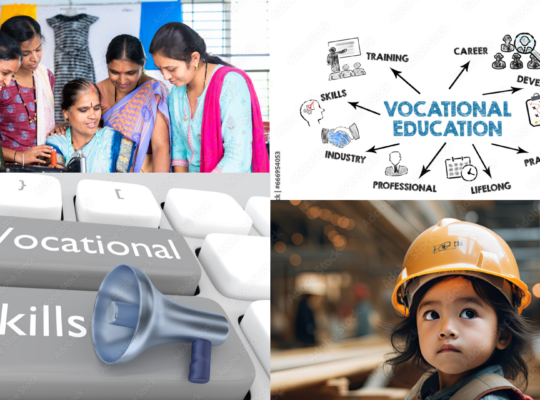
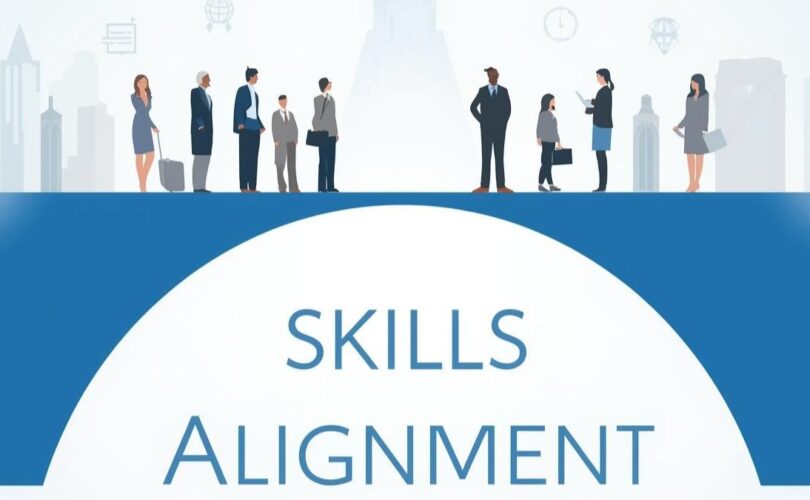
The digital revolution has brought unprecedented opportunity, but it’s also exposed a critical vulnerability: The Skills Gap.
In nearly every industry, the knowledge and abilities taught in traditional education no longer match what’s urgently needed in the modern workplace. Employers are scrambling for talent equipped with both technical mastery and essential human skills (like critical thinking and communication). This disconnect threatens innovation, productivity, and economic growth for all of us.
This is where Consulting in Education steps in as the vital strategic bridge.
The Core Problem: A Disconnected Pipeline
The workplace is evolving at the speed of tech (AI, automation, new tools), while traditional educational frameworks struggle to keep pace. The result?
- Millions of unfilled positions globally due to a lack of specialized talent.
- Stalled innovation and diminished corporate growth.
- Job insecurity for individuals whose current skills are becoming obsolete fast.
The cost is significant: lost productivity, extended job vacancies, and a misalignment of investment in learning. We need a targeted, expert intervention to ensure learning translates directly into employability and organizational agility.
Consulting: The Strategic Fix
Educational consultants are not just advisors; they are strategic integrators. They work with schools, universities, and corporate L&D teams to diagnose the exact competencies in short supply.
How Educational Consulting Closes the Gap:
- Skills Gap Analysis: This is the essential first step. Consultants conduct a strategic assessment to pinpoint the chasm between current skill sets and future market demands. They look beyond just technical know-how to include high-demand soft skills like leadership, complex problem-solving, and digital literacy.
- Unbiased Road-mapping: They provide tailored, data-backed recommendations to institutions on how to modernize curricula, integrate work-centric projects, and align teaching methods with industry shifts.
- Future-Proofing Talent: By fostering collaboration, consultants ensure that educational investments nurture a talent pipeline that is relevant not just for today, but for the next 5-10 years.
A Multi-Pronged Strategy for Real Impact
Bridging this gap requires active partnership between academia and business. Consultants often facilitate the following high-impact strategies:
- Co-Design Curricula: Businesses must partner with educators to inject real-world case studies and project specifications directly into learning modules. (Learning must reflect the job.)
- Prioritize Experiential Learning: Promote apprenticeships, internships, and project-based collaborations. (Learners need direct workplace exposure.)
- Integrate Soft Skills: Explicitly teach and assess communication, critical thinking, and leadership alongside technical training. (Human skills drive long-term success.)
- Invest in Educator PD: Ensure teachers and professors are continually upskilling to stay current with technological and pedagogical advances.
- Cultivate Lifelong Learning: Create a corporate culture where upskilling and reskilling are normalized and incentivized throughout an employee’s career.
The Call to Action for Business Leaders & Educators
The skills gap is not an education problem or a business problem—it’s a shared strategic risk.
Embracing consulting in education is the most efficient way to systematically identify gaps, tailor precise solutions, and ensure immediate alignment with the evolving demands of the fast-changing world. It’s an investment that future-proofs your curriculum, your workforce, and ultimately, your organization’s competitive edge.
We need to move from talking about the skills gap to actively building the skills bridge.
📌 Key Takeaways for You:
- Skills Gap Analysis is the non-negotiable starting point for any talent strategy.
- Collaboration between business and education must be formalized to align outcomes with market needs.
- Experiential learning (internships, projects) is the most direct pathway to real-world employability.
- Soft skills are just as critical as technical prowess for long-term career success.
What steps is your organization taking right now to actively co-create the workforce of the future? Share your thoughts below!